Understanding the complexities of grain bin design requires an exploration of both historical contexts and modern technological advancements. The design of these structures has evolved significantly from simple storage containers to sophisticated systems engineered to enhance efficiency in grain management. In essence, grain bins are not merely storage units; they are a crucial component of the agricultural supply chain.
As farmers and agricultural engineers work together to optimize space and preserve grain quality, the art and science of grain bin design become an indispensable part of today’s farming landscapes. This article delves into various aspects of this intriguing subject, detailing the considerations and innovations that shape modern grain storage facilities.
The Evolution of Grain Bin Design
Grain bins have significantly evolved from the rudimentary storage pits used in ancient agricultural practices. Early farmers depended on simple, often underground, storage solutions that lacked the structural integrity and capacity of modern bins. With the advent of industrial agriculture, there was a pressing need to improve storage facilities to accommodate larger crop yields. Engineers began to design more robust and spacious bin structures, utilizing a variety of materials such as wood, corrugated steel, and concrete. These advancements represent a shift towards optimizing storage quality and capacity, meticulously tailored to the growing demands of modern agriculture.
The driving force behind the evolution in grain bin design is the need to prolong the shelf life of stored grain while maintaining its quality. Modern grain bins are typically equipped with features like aeration systems, which help to control temperature and moisture levels within the bins. These systems are vital in preventing spoilage and pest infestation, ensuring that the stored grain remains fresh and marketable for extended periods. Furthermore, innovations such as automated monitoring systems provide real-time information about the conditions inside the bins, empowering farmers to make timely and informed decisions. This technological integration marks a significant leap from traditional storage methods, emphasizing the importance of precision and efficiency in agricultural practices.
Among the various materials used in constructing grain bins, corrugated steel stands out for its durability and ease of maintenance. This material not only provides a sturdy framework that can withstand environmental stressors like wind and precipitation but also offers a cost-effective solution for large-scale storage. Additionally, steel bins are typically modular, allowing for easy expansion to accommodate fluctuating storage requirements. The versatility of design afforded by steel construction enables customization that meets the specific needs of different farming operations, reinforcing their status as a preferred choice in modern grain bin design. By enhancing both functionality and adaptability, modern grain bins play a critical role in streamlining agricultural storage facilities.
Materials and Engineering in Grain Bin Construction
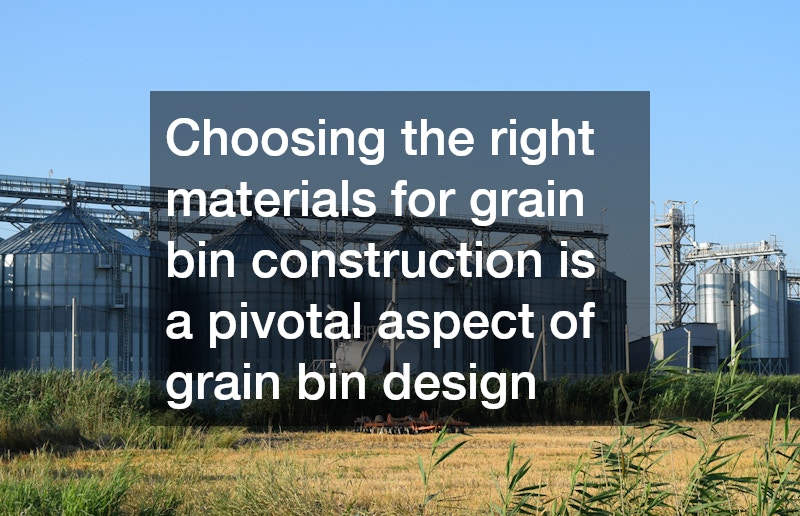
Choosing the right materials for grain bin construction is a pivotal aspect of grain bin design. The selection process is guided by factors such as climate, crop type, capacity needs, and maintenance considerations. Steel, with its favorable characteristics, often tops the list due to its robustness and longevity. The use of advanced anti-corrosion coatings further enhances the durability of steel bins, making them resistant to adverse weather conditions. In colder regions, the incorporation of insulated steel panels helps maintain stable internal temperatures, protecting the stored grain from the detrimental effects of freezing temperatures.
The structure’s foundation is another key engineering aspect that influences the success of a grain bin design. A solid foundation ensures stability and can bear the significant weight of the filled bin. Special attention is given to factors like soil type and site preparation to prevent issues such as sinking or tilting over time. Engineers often provide tailored solutions like reinforced concrete floors, which offer both strength and reduced risk of pest infiltration. Successfully balancing material selection with foundational integrity and engineering innovations allows grain bins to serve as reliable storage solutions, crucial for efficient grain management.
Innovations and Future Trends in Grain Bin Design
The grain bin industry is witnessing a wave of innovations aimed at enhancing storage efficiency and minimizing ecological impact. Novel technologies like solar-powered drying systems represent an exciting development, providing an eco-friendly alternative to traditional power sources. These systems not only reduce energy costs significantly but also align with sustainable farming practices. For example, solar panels installed on the roofs of grain bins can harness sunlight, converting it into energy used to power fans and aeration systems. Such innovations underscore the growing emphasis on sustainability within agricultural design.
Another trend shaping the future of grain bin design is the incorporation of smart technology. IoT-powered sensors and monitoring tools are becoming ubiquitous, providing farmers with unprecedented access to data about their storage environments. These technologies allow for the seamless tracking of variables such as temperature, humidity, and carbon dioxide levels, facilitating proactive management to preserve grain quality. As technological advancements continue to emerge, the integration of artificial intelligence may soon enable predictive analytics, further optimizing grain storage strategies and maximizing output efficiency.
Looking ahead, the design of grain bins is likely to become even more precise and adaptable, thanks to ongoing research and development. Material science advancements are paving the way for new construction materials that offer superior insulation and environmental resilience. Customizable and modular bin designs are also on the rise, providing scalable solutions that can adjust to changing storage needs. As the agricultural industry faces growing challenges associated with climate change, these forward-thinking approaches in grain bin design will be instrumental in ensuring food security and agricultural sustainability on a global scale.