When business leaders discuss scaling, the conversation almost always centers on market expansion, aggressive customer acquisition, capital investments, and product innovation. Yet, one of the most significant barriers to sustainable growth lies hidden in plain sight within existing operations: degraded physical assets, aging equipment, and deferred facility maintenance. Treating repairs solely as unwanted line-item expenses or emergency interventions creates a reactive culture that quietly drains profit margins, damages brand reputation, and throttles day-to-day throughput.
To unlock true operational momentum, forward-thinking executives are reframing repairs from reactive firefighting into a proactive catalyst for organizational efficiency. Every machine, facility structure, digital hardware unit, and utility connection forms the foundation upon which daily workflows rely. When these elements operate below peak efficiency or suffer sudden failures, the resulting downtime ripples across entire supply chains and customer journeys. Transforming maintenance into an operational driver requires a deliberate shift in perspective.
Shifting Mindsets from Reactive Firefighting to Operational Investment
Transitioning to an investment-minded approach starts with re-evaluating how maintenance expenditures are budgeted and managed. In a typical reactive framework, leadership waits for an asset to break down completely before allocating funds for restoration. This approach guarantees maximum disruption, higher expedited service rates, lost production hours, and stressed workers.
By shifting toward scheduled maintenance and strategic upgrades, leaders turn unpredictable chaos into planned efficiency. Restoring assets to optimal working condition often uncovers bottleneck points in workflows that were previously hidden by slow performance. Furthermore, taking a systematic view of repair schedules allows companies to align maintenance windows with low-volume operational cycles, ensuring that core productivity remains untouched while equipment receives critical care.
Evaluating Total Cost of Ownership Across Infrastructure Assets
To make sound economic decisions regarding asset care, executives must look beyond the immediate price tag of a service call and analyze the total cost of ownership. Every physical and technological asset incurs costs across three distinct phases: acquisition, ongoing operation, and ultimate retirement.
When organizations ignore minor structural or technical flaws, operating costs compound rapidly, which is where an accountant firm can help. Inefficient machinery consumes more power, worn-out hardware increases task completion times, and compromised structural elements expose the organization to severe liability risks. Working closely with an experienced accountant firm enables business leaders to map these hidden costs accurately, establish clear capital depreciation schedules, and calculate exact ROI for every repair initiative.
Optimizing Facility Performance and Asset Longevity
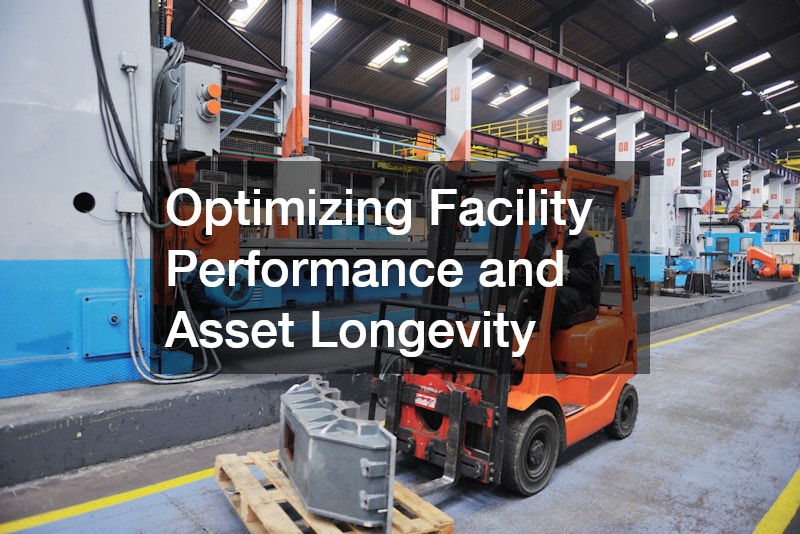
Physical facilities represent a massive capital expenditure for any expanding business. Whether managing warehouse distribution hubs, manufacturing plants, corporate headquarters, or retail footprints, the physical envelope directly dictates operational capacity and employee productivity. A building that suffers from structural leaks, temperature fluctuations, or broken access systems creates friction that slows down daily work.
Systematic structural repairs do far more than fix existing flaws; they restore energy efficiency, protect high-value inventory from environmental degradation, and ensure strict compliance with safety regulations. Investing in high-grade building maintenance allows businesses to scale within their current footprint without incurring the massive capital costs associated with physical relocation.
Enhancing Building Envelopes to Cut Overhead and Downtime
The exterior envelope of any commercial facility is its first line of defense against harsh environmental elements, seasonal weather extremes, and energy loss. Minor roof leaks or degraded insulation can quietly damage inventory, destroy electrical systems, and drive utility bills through the roof long before a major catastrophic failure occurs.
Promptly scheduling professional commercial roofing maintenance ensures that subtle structural vulnerabilities, flashing damage, and membrane deterioration are resolved before water penetrates sensitive inventory zones. Beyond leak prevention, restoring reflective coatings and thermal barriers directly reduces heating and cooling costs, lowering overall operational overhead and freeing up working capital for core growth initiatives.
-
Conduct quarterly visual inspections of all roof membranes, drainage paths, and flashing seals to catch water intrusion early.
-
Clear debris from roof drains and gutters regularly to prevent heavy standing water accumulation during severe storms.
-
Recoat aging structural surfaces with high-reflectivity thermal sealant to minimize energy transfer and trim monthly utility bills.
-
Document all structural interventions to maintain full compliance with property insurance policies and commercial leases.
Upgrading Access Points for Seamless Logistics and Inventory Motion
In distribution facilities, fulfillment centers, and manufacturing spaces, loading docks and bay entrances serve as the critical arteries of inbound and outbound movement. When garage bays, mechanical shutters, or loading gates malfunction, logistics grind to an abrupt halt, stranding transport vehicles and frustrating delivery partners.
Integrating high-performance commercial overhead doors into routine facility maintenance protocols eliminates severe operational bottlenecks. Properly balanced tracks, functional safety sensors, and rapid motor drives accelerate warehouse traffic flow, improve interior climate control, and protect staff from hazardous mechanical shifts.
-
Implement bi-monthly lubrication and balance checks for all heavy-duty bay tracks and spring mechanisms.
-
Replace worn weather seals on commercial loading doors immediately to prevent temperature loss and pest intrusion.
-
Upgrade older manual entrance gates with automated high-speed motor systems to reduce truck turnaround times.
-
Establish clear employee operating protocols for bay access to prevent physical impacts and expensive mechanical collisions.
Marine and Waterfront Infrastructure Reliability
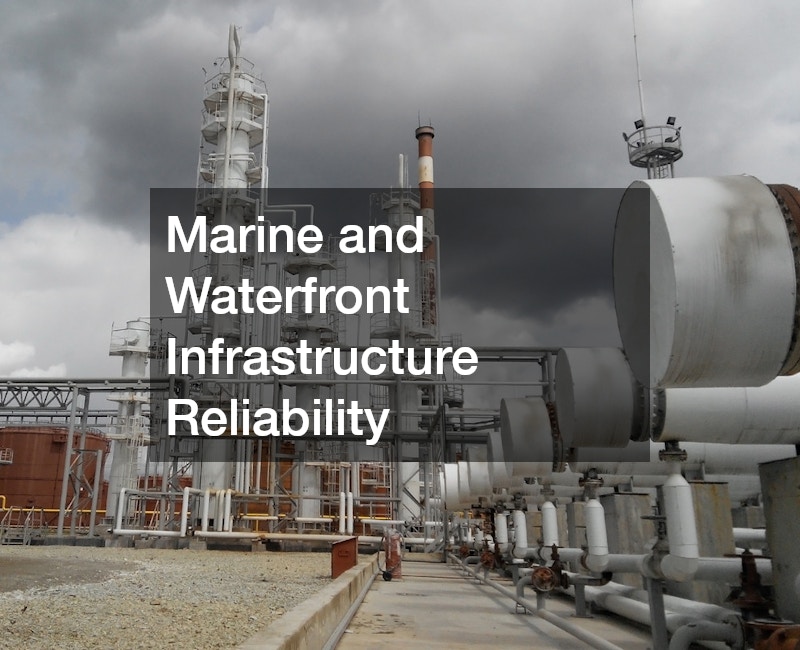
For businesses operating in coastal regions, marine logistics, eco-tourism, maritime transport, or commercial fishing, waterfront infrastructure represents the core engine of daily revenue. Working in marine environments presents unique operational challenges due to saltwater corrosion, tidal shifts, storm surges, and constant biological fouling.
Neglecting marine hardware or allowing submerged debris to accumulate leads directly to lost operational days, severe asset damage, and potential environmental liability. By establishing rigorous maintenance and restoration protocols for waterborne assets, maritime enterprises maintain strict schedules and deliver reliable service.
Securing Marine Transport Assets to Maintain Daily Schedules
Vessels, floating docks, and mechanical launching platforms require specialized care to withstand constant exposure to harsh aquatic conditions. Mechanical lifts and winch systems bear heavy weights daily; any structural weakness or hydraulic failure threatens worker safety and risks dropping valuable commercial vessels.
Routinely engaging certified boat lift services ensures that mechanical cables, hydraulic motors, and structural cradles are operating within safe load limits. Promptly repairing rusted components, replacing frayed cables, and servicing hydraulic lines prevents catastrophic equipment failures, allowing commercial vessels to launch and dock on precise schedules without delay.
-
Inspect stainless steel cables and pulleys weekly for signs of fraying, bird-caging, or severe surface oxidation.
-
Service hydraulic pumps and fluid lines quarterly to guarantee smooth, reliable vessel lifting operations.
-
Clean marine growth and barnacles from structural cradles and submersible bunks to preserve load-bearing integrity.
-
Recalibrate electrical control systems regularly to ensure balanced weight distribution during vessel hoisting.
Eliminating Waterway Hazards and Clearing Operational Obstacles
Waterfront channels, docking slips, and boat yards must remain free of submerged hazards, abandoned hulls, and derelict maritime equipment. Abandoned or sunken vessels restrict maneuvering space, damage commercial hulls, and expose business owners to heavy regulatory fines from maritime authorities.
Contracting professional boat removal services clears navigation channels, reclaims valuable slip space, and eliminates hazardous hazards before they cause severe damage to working fleets. Removing underwater obstructions restores safe water access, allowing marine transportation businesses to maximize dock utilization and expand seasonal operational capacity.
-
Map dock slip depths and channel routes routinely to identify submerged debris or shifting sandbars.
-
Remove derelict or sunken hulls promptly to prevent structural damage to active commercial fleet vessels.
-
Maintain clear emergency access zones along waterfront docks to comply with local maritime safety standards.
-
Install heavy-duty impact bumpers along dock edges to protect vessel hulls during rapid tidal changes and rough weather landings.
Enterprise Technology and Utilities Restoration
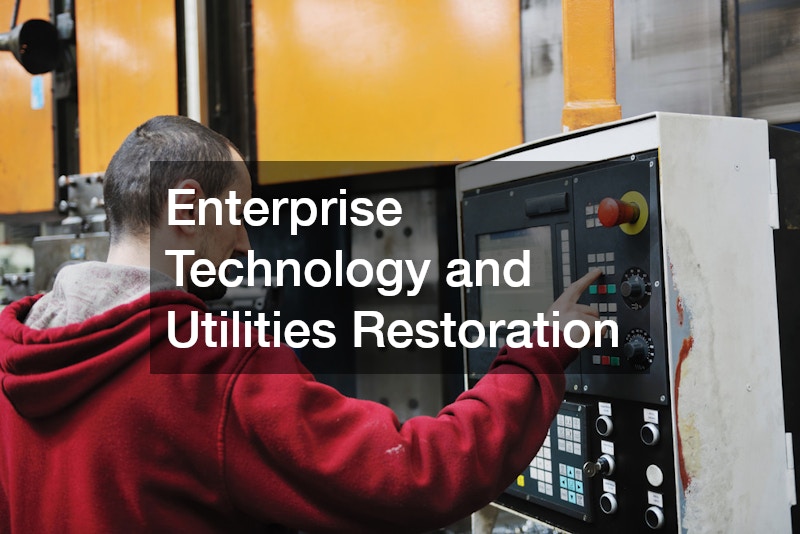
Modern business operations rely just as heavily on digital connectivity and essential site utilities as they do on heavy machinery and physical real estate. A sudden failure in local computer networks, sewage management, or water delivery can freeze administrative work, halt production lines, and force facility closures within minutes.
Ensuring that core technology assets and facility utilities receive rapid, qualified repairs transforms fragile operational setups into resilient, high-throughput engines. When internal systems run cleanly and consistently, staff members can focus on business output rather than troubleshooting infrastructure breakdowns.
Restoring Core Hardware Systems to Maintain High Data Throughput
In today’s digital economy, workplace efficiency depends entirely on the stability of internal servers, workstation hardware, network switches, and data processing platforms. Slow processing speeds, malware infections, or hardware overheating drastically cut employee output and expose sensitive business data to cybersecurity threats.
Establishing a dedicated pathway for immediate computer repair keeps essential administrative and technical workflows moving without friction. Fixing thermal throttling, upgrading failing hard drives, replacing degraded motherboards, and optimizing system memory transforms sluggish legacy systems into high-speed machines capable of supporting scaled workloads.
-
Monitor CPU and storage health metrics across all office workstations to detect impending hardware failures before crashes occur.
-
Clean dust accumulation inside server towers and desktop cooling fans bi-annually to prevent thermal throttling.
-
Upgrade legacy mechanical drives to solid-state storage to accelerate application boot times and file transfers.
-
Standardize workstation hardware configurations across departments to simplify hardware repairs and spare parts management.
Ensuring Uninterrupted Sanitation and Water Systems for Remote Facilities
For industrial plants, agricultural processing sites, and remote commercial compounds, utility infrastructure is often managed on-site rather than through municipal lines. A breakdown in wastewater handling creates severe health hazards, environmental violations, and immediate operational shutdowns.
Executing timely septic pump replacements prevents catastrophic sewage backups, preserves site hygiene, and maintains compliance with local environmental health standards. Restoring aging pumps and float switches guarantees that heavy volume effluent moves continuously away from operational areas without dangerous backup risks.
-
Inspect wastewater tank float switches and alarm systems monthly to ensure accurate liquid level detection.
-
Test backup generator connectivity for all utility pumps to maintain continuous drainage during regional power outages.
-
Schedule professional septic tank pumping at regular intervals to remove accumulated solids before pump impellers clog.
-
Replace mechanical seals and worn impellers immediately if pump flow rates show noticeable drops during peak facility usage hours.
Securing On-Site Water Delivery Infrastructure for Remote Operations
Water is a critical utility for industrial processing, agricultural production, sanitation, and employee consumption. Remote facilities that rely on groundwater wells face immediate operational halts if water pressure drops or pump systems fail due to mineral buildup or motor burnouts.
Partnering with a licensed well drilling service allows business managers to repair aging well heads, deepen existing boreholes, and install modern high-capacity pumps. Maintaining clean water output and stable line pressure ensures uninterrupted industrial processing, protects cooling equipment from mineral scaling, and guarantees adequate site supply for all operational needs.
-
Monitor well flow rates and static water levels quarterly to track seasonal aquifer performance.
-
Install high-grade water filtration and softening systems to protect industrial machinery from mineral buildup.
-
Test water purity and biological parameters regularly to ensure full compliance with occupational health standards.
-
Recalibrate pressure tanks and switch controls annually to eliminate pressure surges across facility plumbing.
Brand Perception and Fleet Management Upgrades
Physical repairs extend far beyond hidden structural mechanics and internal hardware; they directly influence how clients, investors, and prospective partners perceive an organization. A company’s commercial fleet, physical buildings, and transport equipment act as rolling and stationary billboards that communicate professionalism, attention to detail, and financial stability.
Neglecting the outward appearance of mobile assets or operational structures conveys a message of carelessness to the market. Conversely, investing in clean, modern, and fully repaired visual assets builds brand authority, elevates customer trust, and turns daily operational equipment into powerful marketing engines.
Restoring Mobile Assets to Turn Logistics into Marketing Channels
Commercial delivery vans, service trucks, and transport fleets travel thousands of miles through target markets every month. Driving worn, rusted, or unbranded vehicles represents a massive missed marketing opportunity while signaling poor operational standards to watching prospects.
Applying high-quality commercial fleet wraps to newly repaired and painted vehicles transforms ordinary service trucks into striking mobile advertisements. Fixing body damage, replacing faded graphics, and protecting vehicle surfaces keeps fleet assets looking pristine while reinforcing brand presence across every highway and job site they touch.
-
Repair minor body dents, rust patches, and paint flaws before applying new protective vehicle wraps.
-
Wash and detail mobile fleet vehicles weekly to maintain visual appeal and protect graphics from road grime.
-
Ensure clear, high-contrast company contact information and branding elements are visible from all sides of the vehicle.
-
Conduct regular multi-point mechanical inspections on fleet vehicles to ensure safety matches their high-end visual presentation.
Modernizing Custom Metal Structures to Expand Production Capacities
As production volume increases, businesses often outgrow their initial floor plans and require quick, cost-effective structural expansions. Dilapidated or poorly designed utility structures force companies into tight operational quarters, slowing inventory movement and creating unsafe working conditions.
Erecting or expanding a custom PEMB provides a flexible, durable, and cost-effective solution for growing operational space demands. Repairing existing steel frameworks, expanding bay spans, and retrofitting modern insulation into pre-engineered metal buildings allows companies to scale floor space rapidly without enduring long, expensive traditional construction timelines.
-
Inspect structural steel bolts, bracing cables, and frame welds annually for signs of stress or corrosion.
-
Seal panel joints and replace weathered fast-fastener washers to maintain complete weatherproofing.
-
Retrofit insulated wall and roof panels into existing metal frames to lower facility heating and cooling costs.
-
Plan structural expansion layouts carefully to align material flow directly with incoming and outgoing shipping lanes.
Building a scalable, high-throughput business requires a fundamental shift in how leadership views asset care. Far from being a passive financial burden, strategic maintenance serves as a vital growth driver that protects capital, boosts employee efficiency, optimizes daily logistics, and enhances market reputation.
By establishing proactive maintenance schedules, tracking total asset performance, and partnering with qualified service specialists, organization leaders eliminate operational friction before it turns into expensive downtime. Every restored machine, upgraded facility component, and optimized digital asset creates a resilient operational foundation. As your business continues to expand its market reach, a strong, well-maintained infrastructure guarantees that your operational backbone can easily handle the increasing demands of growth.